
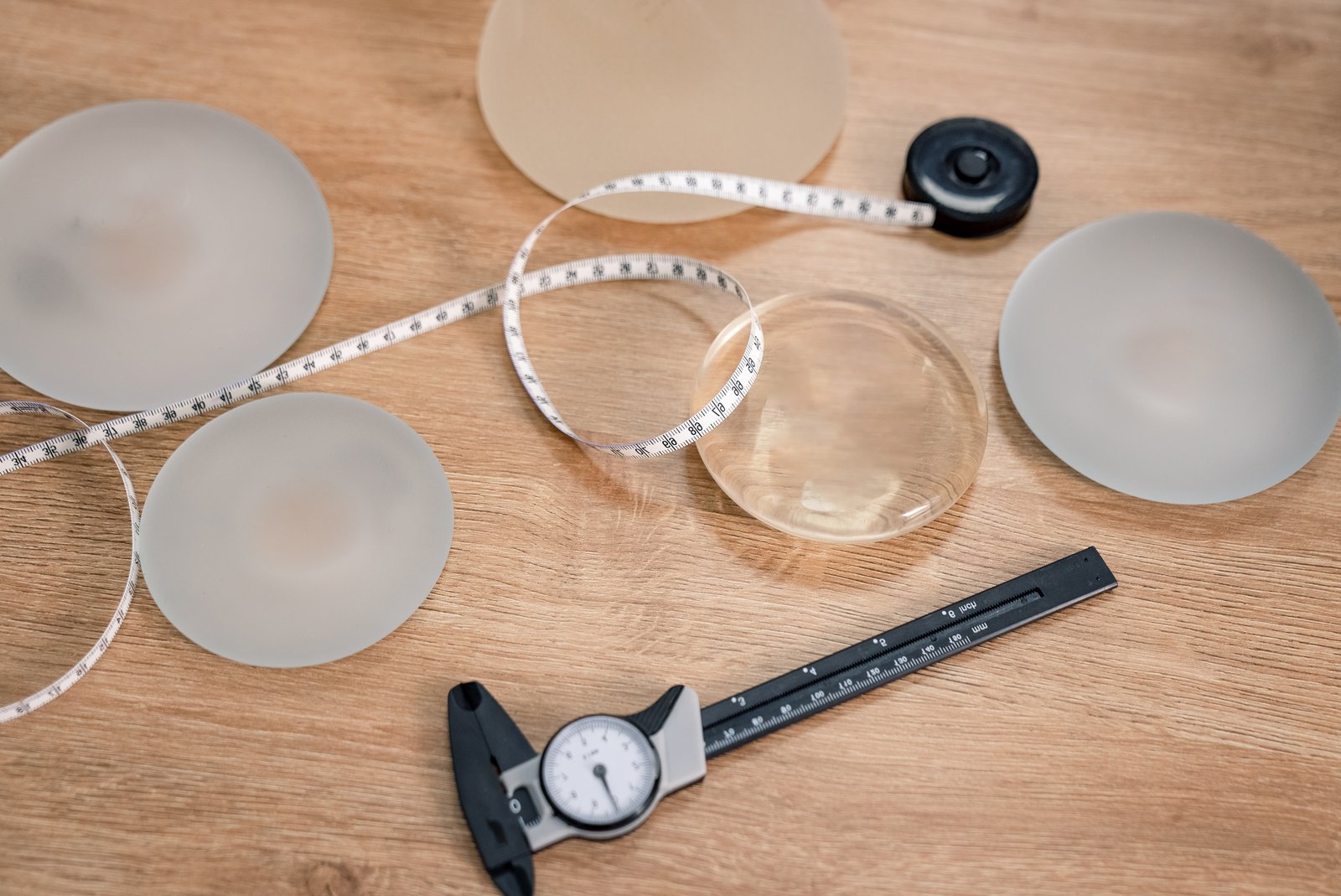
Over vs. Under the Muscle Breast Implants: How to Choose
Under the muscle (submuscular) placement covers more of the implant with your own tissue, which tends to reduce visible rippling, keeps more breast tissue in view on a mammogram and is linked to lower rates of capsular contracture. Over the muscle (subglandular) placement usually means a quicker recovery and no implant movement when you flex your chest. Which suits you depends mostly on how much natural breast tissue you have.
Implant placement is one of the decisions that can feel most technical, and most patients arrive at their consultation unsure which to ask for. This guide sets the two options side by side, explains what each one changes in daily life, and shows how our surgeons approach the choice in breast augmentation at Center for Plastic Surgery.
Over vs. Under the Muscle at a Glance
The difference is the layer the implant sits beneath. According to the American Society of Plastic Surgeons, an implant is placed either under the pectoral (chest) muscle, called submuscular placement, or directly behind the breast tissue and over the muscle, called subglandular or submammary placement.
| Over the muscle (subglandular) | Under the muscle (submuscular) | |
|---|---|---|
| Coverage | Breast tissue and skin only | Muscle plus breast tissue and skin |
| Best suited to | A good amount of natural breast tissue | Little natural tissue or a slim build |
| Rippling and visible edges | More likely with thin tissue | Typically less likely |
| Recovery | Usually quicker | Slightly longer; implants settle over weeks to months |
| Movement when flexing | Implant stays still | Some movement is common |
| Capsular contracture | Higher reported rate | Lower reported rate |
Sources: our breast augmentation page, the American Society of Plastic Surgeons, and the reviews linked below. These are general patterns, and your own anatomy can shift the balance.
Which Placement Looks More Natural?
For most women with little natural breast tissue, under the muscle tends to look softer, because the muscle adds a layer over the upper edge of the implant. For women with more tissue of their own, over the muscle can look just as natural.
Under the muscle: implants are typically covered better, which reduces the risk of rippling or palpability, meaning being able to see or feel the implant through the skin. On our breast augmentation page, our surgeons describe this as the more common of the two placements.
Over the muscle: this placement works best when you have a decent amount of natural breast tissue. Patients with little tissue, or who are very thin, may be able to see the implant.
Implant type matters too: saline implants carry a higher risk of visible rippling and feel less like natural breast tissue than silicone, so fill and placement are usually weighed together. Our guide to saline vs. silicone implants covers that choice.
Size plays a part as well: a larger implant asks more of the tissue covering it. If you plan to breastfeed in the future, our article on breastfeeding with breast implants is worth reading too. Our breast implant sizes guide explains how volume is measured, and you can compare results for different body types in our photo gallery.
How Recovery Differs
Over-the-muscle placement usually means an easier first stretch of recovery, because fewer tissues are moved during surgery. Under-the-muscle placement needs a slightly longer recovery, as the implants settle over several weeks to a few months.
The American Society of Plastic Surgeons notes that acute discomfort typically eases after one to five days, while soreness and swelling may last a few weeks. Our rapid recovery breast augmentation timeline, whichever placement you have, typically looks like this:
Week 1: bruising and discomfort peak; you start gentle arm and shoulder movement, implant massage, and showering once cleared.
Week 2: most patients return to work, school and nonstrenuous activities.
Weeks 3–4: bruising and swelling fade, and low-impact exercise can resume.
Month 2: strenuous exercise and side sleeping are usually allowed, and the implants settle, the stage often called "drop and fluff."
Month 3 and beyond: results continue to settle and scars fade.
With under-the-muscle implants, the settling phase can take longer, and implants often sit high and feel firm until it is complete. Everyone heals differently, so stick with your surgeon's timeline.
If You Lift Weights or Train Hard
If you do a lot of chest work, the main trade-off is movement. Implants under the muscle can shift or change shape when the chest muscle contracts, which surgeons call animation deformity. Over the muscle, the implant is not attached to that motion.
A 2019 systematic review in Archives of Plastic Surgery found that across the studies it included, a median of 58 percent of patients had some degree of animation after under-the-muscle placement, and that the degree of movement appeared to rise with how much muscle was involved. For many patients it is mild, but if you lift heavily, compete or simply do not want to see movement when you flex, tell your surgeon early. Our breast augmentation page also notes that over-the-muscle placement allows for less implant movement during physical exercise.
Capsular Contracture and Other Risks
Capsular contracture, where the scar tissue around an implant tightens and the breast becomes firm, has been reported less often with under-the-muscle placement. The FDA notes that its exact cause is not known, and that severe cases may need another operation.
The largest recent review: a 2026 meta-analysis in Aesthetic Plastic Surgery of 91 studies covering more than fifty thousand patients reported capsular contracture in 6.85 percent of over-the-muscle implants, compared with 1.83 percent under the muscle and 1.99 percent with the dual-plane technique.
What did not differ: a separate 2026 meta-analysis in the Aesthetic Surgery Journal, limited to cosmetic augmentation, found no significant difference in patient satisfaction or reoperation between the two placements. Its authors stressed that most of the data is observational and that the choice should stay individualized.
Risks for every placement: the American Society of Plastic Surgeons lists anesthesia risks, bleeding, infection, fluid collection (seroma), changes in nipple or breast sensation, implant leakage or rupture, implant malposition, wrinkling of the skin over the implant, poor scarring and the possibility of revision surgery, along with rare conditions such as BIA-ALCL.
Breast implants are not lifetime devices, whichever pocket they sit in, and the FDA advises that you should expect further surgery at some point. Your surgeon will review these risks with you before you decide.
What Placement Means for Mammograms
Implants under the muscle generally interfere less with breast imaging. Our surgeons note that this placement helps keep your glandular tissue fully visible during a mammogram.
RadiologyInfo, the patient site of the American College of Radiology and the Radiological Society of North America, explains that both silicone and saline implants are not transparent on x-rays and can block a clear view of nearby tissue, especially when the implant sits in front of the chest muscle rather than beneath it. Experienced technologists know how to position and compress the breast to improve the view. Whichever placement you choose, tell the imaging center that you have implants when you book.
How Our Surgeons Help You Choose
There is no single right answer, only the right answer for your body and goals. Our surgeons weigh three things: the look you want, how much natural breast tissue you have, and your body type.
Dual plane: many surgeons use a version of under-the-muscle placement called dual plane, first described in Plastic and Reconstructive Surgery in 2001, which combines a pocket partly behind the muscle with a pocket behind the breast tissue in the same breast, aiming to keep enough soft-tissue coverage while limiting the trade-offs of either pocket alone. Ask your surgeon which version of each placement they recommend for you.
Preservation Breast Augmentation: for implants placed above the muscle, our surgeons use a preservation approach that marks and protects the supporting ligaments of the breast while the pocket is created. They were among the first aesthetic plastic surgeons in the country invited to the Motiva™ headquarters in Costa Rica to learn the technique in 2024, and also offer Motiva's Preservé™ procedure, which uses smaller scars of approximately 1 inch.
Hybrid breast augmentation: if you have thin breast skin or choose above-the-muscle implants, fat transfer can be added to help camouflage the implant's edges for a more natural-looking result.
Lift needs: placement does not lift sagging breasts on its own. If your skin has lost elasticity, breast augmentation with lift may be recommended.
At your consultation, your surgeon examines your chest, places trial sizers in a bra so you can see the effect, and walks you through the implant options alongside placement. Our breast implant options page covers fill, shape and size in more detail. For questions about fees, see our pricing and cost information page.
Interested in Breast Augmentation in Washington, D.C.?
The board-certified plastic surgeons at Center for Plastic Surgery, including Dr. Samir S. Rao, perform breast augmentation in our private, AAAASF-certified ambulatory surgery center. At your consultation, your surgeon looks at your tissue, listens to the result you have in mind, and explains which placement and implant fit it best. We welcome patients from Washington, DC, Chevy Chase, Bethesda, Arlington, Fairfax, and surrounding areas. Call our Chevy Chase office at (301) 652-7700 or our Tysons Corner office at (703) 560-2850, or request a complimentary consultation.
Frequently Asked Questions
Does placement change how long implants last?
Not in a clear way. The FDA states that breast implants are not lifetime devices and that the longer you have them, the more likely removal or replacement becomes. A 2026 meta-analysis in the Aesthetic Surgery Journal found no significant difference in reoperation between over- and under-the-muscle placement, so plan for future surgery and regular check-ins with your plastic surgeon either way.
Do I still need implant screening if mine are under the muscle?
Yes. Placement does not change the screening advice. The American Society of Plastic Surgeons notes that the FDA recommends an MRI or ultrasound five to six years after silicone implants are placed and every two to three years after that, because some ruptures cause no symptoms. Routine mammograms continue as your doctor advises, and you should let the imaging center know you have implants.
Can I breastfeed with either placement?
Breastfeeding with implants is considered safe, but the size and placement of your implants may affect your ability to do so. If you hope to breastfeed in the future, tell your surgeon at your consultation so they can plan to avoid the milk ducts and advise you on implant choices.
Does placement change where my incision goes?
Not necessarily. The pocket and the incision are separate decisions. At Center for Plastic Surgery, the options are inframammary, a horizontal incision in the natural fold under the breast, or periareolar, around the lower edge of the areola. Your anatomy, scar preference, implant size and implant type guide the choice, and periareolar incisions can limit implant size and material.

About the Author
November 18, 2026