
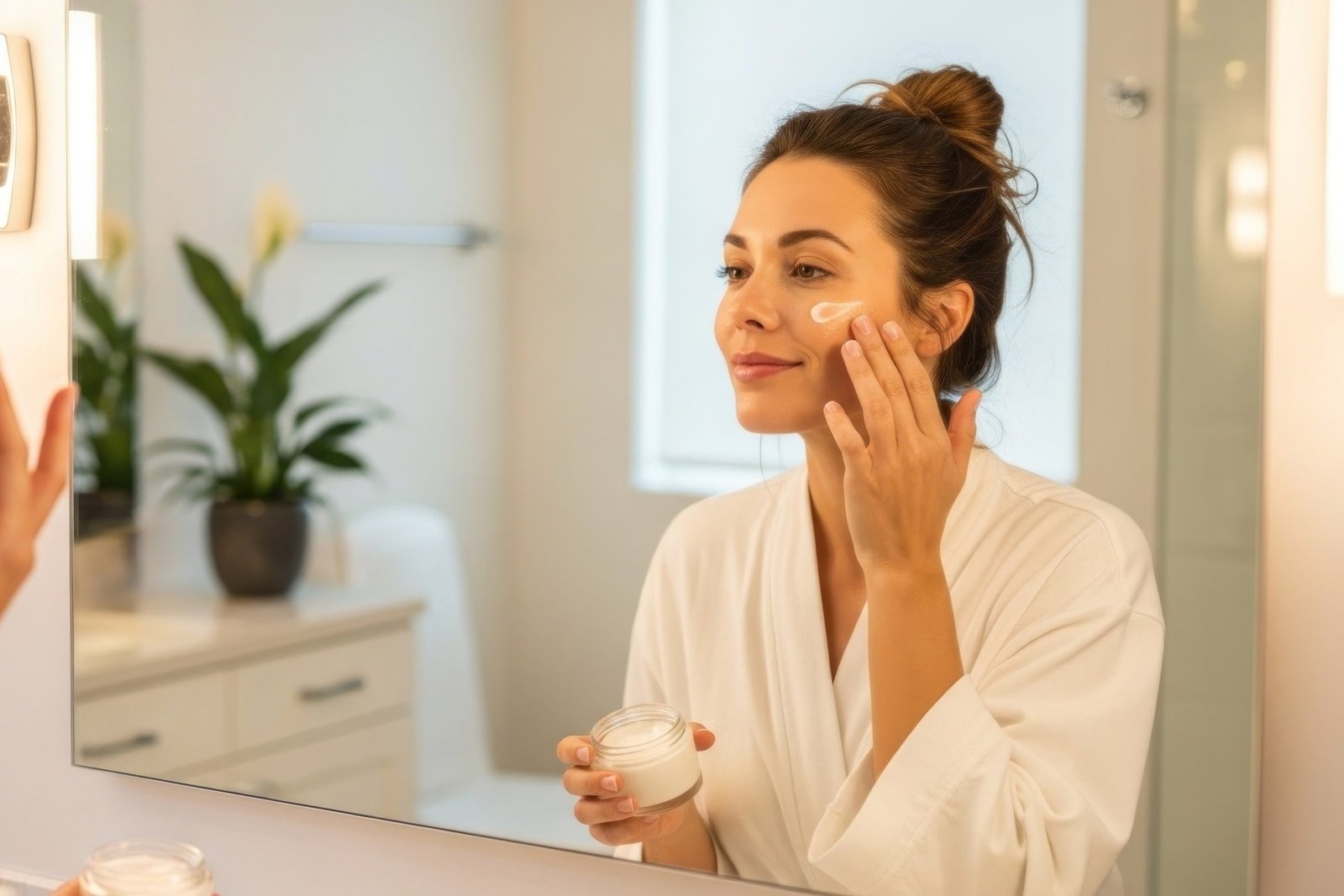
Chemical Peel Recovery: What to Expect, Day by Day
Chemical peel recovery depends mostly on how deep the peel goes. After a light peel, your skin is typically red for a short time and then flakes for three to seven days, and many people can wear makeup the same day or the next. A medium peel usually takes seven to 14 days to heal, with swelling and crusting along the way. A deep peel needs 14 to 21 days and time at home.
At Center for Plastic Surgery, our team offers a range of chemical peels matched to your skin type and concerns. Below: what each depth of peel feels like while it heals, how to care for your skin, and when to call us.
Why Recovery Depends on the Peel's Depth
A chemical peel works by removing the outer layers of skin so that smoother, brighter skin can take their place. The deeper the solution reaches, the more your skin has to renew, and the longer it takes to heal.
Cleveland Clinic describes three broad depths:
Light (sometimes called a "lunchtime" peel): removes the outermost layer of skin. It gives a subtle improvement and is often done as a series. Recovery may take a few hours to a few days, with little to no downtime.
Medium: removes the outer layer and the upper part of the middle layer of skin. Recovery may take a week or more and involves some downtime.
Deep: reaches the lower middle layer of skin. It is done under general anesthesia, it needs the longest recovery, and it is a one-time treatment when applied to the face.
Our peels include the RevePeel, ZO and iS Clinical Prodigy peel families. TCA (trichloroacetic acid) peels can also be performed at different depths, depending on what your skin needs. Your provider chooses the peel and its depth with you, so the timeline that applies to you is the one they give you at your visit.
Light, Medium and Deep Peels at a Glance
This comparison uses the recovery guidance published by the American Academy of Dermatology. Treat it as a general guide, not a schedule for your own skin.
| Light peel | Medium peel | Deep peel | |
|---|---|---|---|
| Healing time | 1 to 7 days | 7 to 14 days | 14 to 21 days |
| What your skin does | Redness, then scaling for 3 to 7 days | Redness and swelling; skin crusts and peels off | The area is bandaged while it heals |
| Makeup | Usually right away or the next day | Camouflage makeup after 5 to 7 days | Not for at least 14 days |
| Sun | Daily sunscreen once healed | Avoid the sun until healed | Avoid the sun for 3 to 6 months |
| Follow-up visit | Not usually | Yes | Yes, starting the next day |
Source: American Academy of Dermatology, Chemical peels: FAQs.
After a Light Peel: The First Week
Most people are back to their normal routine almost straight away. Cleveland Clinic compares the reaction to a sunburn: redness first, then scaling that lasts between three and seven days.
Treatment day: you may feel warmth for a few minutes, followed by some stinging while the solution is on. Your skin looks pink or red afterwards.
The next few days: apply the lotion or cream your provider recommends until your skin heals.
After the redness fades: scaling may develop and last three to seven days as the treated layer sheds. Let it come away on its own.
Once healed: sunscreen every day helps you keep the result.
Light peels give a gradual improvement. The AAD notes that three to five peels may be needed for the result you want, repeated every two to five weeks.
After a Medium Peel: The First Two Weeks
Plan for at least a week of visible healing. According to the AAD and Cleveland Clinic, this is what a medium peel typically involves:
First 48 hours: your skin is red and swollen, and the swelling may get worse before it improves. Your eyelids may swell too.
The days that follow: blisters can form and break open, and the skin begins to crust. You will usually be asked to do daily soaks and apply an ointment after each one.
Days 5 to 7: most people can start wearing camouflage makeup.
Days 7 to 14: the crusted skin peels off.
You will usually take an antiviral medicine for 10 to 14 days and stay out of the sun completely until your skin has healed. A follow-up visit is part of the plan. Everyone heals differently, so stick with your provider's timeline rather than a chart.
A deep peel is a different commitment. The AAD notes that it is performed in a surgical setting under general anesthesia, and the skin is bandaged afterwards. It typically means two to three weeks of recovery at home and several follow-up visits in the first week, and it can be done only once.
Aftercare That Helps Your Skin Heal Well
Good aftercare comes down to three things: moisture, protection from the sun, and leaving your skin alone. The AAD and Cleveland Clinic both recommend:
Keep your skin moisturized as directed: skin that dries out and cracks can scar.
Do not pick or scratch: pulling off flakes or scabs raises the risk of infection and scarring.
Avoid tanning of any kind: no tanning beds and no deliberate sun exposure while you heal.
Wear sunscreen daily once healed: this helps you keep the improvement.
Wait on makeup: wear makeup only when your provider says your skin is ready.
Your provider will give you instructions for your specific peel. Follow those first, because the right routine for a light peel is not the right routine for a medium one.
Side Effects and When to Call Us
When a peel is done by an experienced provider, side effects tend to be mild. The AAD lists the ones some patients develop:
Redness that lasts: in some cases it can persist for months.
Skin color changes: temporary darkening, or lighter skin after medium and deep peels. Cleveland Clinic notes that darker skin tones carry a higher risk of darkening after treatment, as do pregnancy, birth control pills and a family history of facial discoloration.
Scarring: rare, but possible.
Cold sore flare-ups: if you have had cold sores before, a peel can bring one back. Tell your provider so they can prescribe medicine to help prevent it.
Infection: rare, but a risk.
Call us if your skin burns, itches or swells, rather than scratching or rubbing it. The AAD notes that serious side effects are often linked to skipping sun protection, not following wound care instructions, picking at the skin, or wearing makeup before the skin has healed.
What a Peel Can and Cannot Change
A peel is good at improving the surface of your skin. The American Society of Plastic Surgeons lists acne and acne scars, fine lines and wrinkles, uneven pigmentation, rough or scaly patches and sun-damaged skin among the things it can improve.
It cannot treat deep lines or wrinkles, significantly tighten loose or sagging skin, or remove deep scars. When sagging is the main concern, a surgical option such as a facelift or eyelid surgery may suit you better. Our chemical peels page explains the other side of that: when fine wrinkles cannot be corrected by a facelift or eyelid surgery, we recommend chemical peels or microdermabrasion.
Results also fade over time, because your skin keeps aging. If you are weighing a peel against a gentler exfoliating treatment, our post on what dermaplaning is and who it suits covers another option. For questions about fees, see our pricing and cost information page.
Interested in Chemical Peels in Washington, D.C.?
At Center for Plastic Surgery, our registered nurses and licensed aestheticians work closely with our board-certified plastic surgeons, including Dr. Samir S. Rao, to build personalized skin care treatment plans for patients from Washington, DC, Chevy Chase, Bethesda, Arlington, Fairfax, and surrounding areas. Call our Chevy Chase office at (301) 652-7700 or our Tysons Corner office at (703) 560-2850, or request a consultation to find out which peel, and which recovery, fits your skin and your schedule.
Frequently Asked Questions
How many chemical peels will I need?
It depends on the depth. Light peels give a gradual result, and the American Academy of Dermatology notes that three to five may be needed, spaced every two to five weeks. Cleveland Clinic says medium peels can be repeated every six to 12 months if needed to maintain results. A deep peel on the face is done only once. Your provider will suggest a plan based on how your skin responds.
How long do chemical peel results last?
Most results fade gradually, because a peel does not stop your skin from aging. The AAD notes that people with a lot of sun damage are likely to keep seeing new spots over time. The AAD recommends daily sunscreen once your skin heals to help maintain results, and lighter and medium peels can be repeated to keep the improvement.
Can I have a chemical peel if I have a darker skin tone?
Often, yes, with the right peel and an experienced provider. Cleveland Clinic notes that superficial peels can generally be used on all skin types, but darker skin carries a higher risk of darkening after treatment. Our procedure page describes the ZO 3-Step Peel® as safe to use on any skin type and color. Your provider will assess your skin before recommending a peel.
What should I stop using before a chemical peel?
Cleveland Clinic advises avoiding tanning and direct sun for two weeks before a peel and stopping retinoid products such as tretinoin one to two weeks before, unless told otherwise. The AAD recommends telling your provider if you have ever taken isotretinoin, get cold sores, scar easily, or take any medicines, herbs or supplements.

About the Author
September 30, 2026