
Tummy Tuck Scar: Where It Sits and How It Fades
A tummy tuck scar usually sits low across your abdomen, between the hip bones and just above the pubic area, so it can be hidden under most underwear and swimsuits. A full tummy tuck also leaves a small scar around the belly button. The scar typically looks pink or red and raised for the first few months, then flattens and fades to a pale line over about a year. It never disappears completely.
If you are weighing a tummy tuck, the scar is probably one of your first questions. This guide explains where each type of incision goes, what the scar looks like as it heals, what you can do to help it, and what our surgeons plan for in tummy tuck surgery at Center for Plastic Surgery.
Where Your Tummy Tuck Scar Will Be
The length and position of your scar depend on which type of tummy tuck you have. All of them aim for a low scar that clothing can cover.
| Mini | Standard (complete) | Extended | |
|---|---|---|---|
| Main scar | Short, about the size of a C-section scar | Low, from hip bone to hip bone, just above the pubic bone | The standard scar, carried up and around the flanks |
| Belly button scar | Usually none | Yes, inside the belly button | Yes |
| Area treated | Below the belly button only | From below the ribcage to the pubic bone | The abdomen plus the hips and sides |
| Often suits | Loose skin only below the navel | Loose skin and separated muscles across the abdomen | Significant skin laxity, often after major weight loss |
Source: our tummy tuck page. The American Society of Plastic Surgeons describes the same pattern, and notes that the belly button keeps its original place on the abdominal wall and is brought out through a new opening.
A shorter scar is not always the better choice: a mini tummy tuck only reaches loose skin below the belly button. If your concerns reach higher, a short scar would leave them untreated. Our article on mini, standard and extended tummy tucks covers who suits each.
Liposuction scars: our surgeons use liposuction in all tummy tuck procedures. The ASPS notes that these extra incisions are very small and are generally made in tissue that will be removed.
For men: the incision is usually placed higher and is less curved than for women.
How the Scar Changes Over the First Year
Expect the scar to look its most noticeable in the early months and to improve slowly after that. The stages below are the ones our surgeons describe on our tummy tuck page, and experiences vary from patient to patient.
About 1 month: the incision is sealed and the scar begins to form.
Months 1–6: the incision heals completely. The scar is pink or red, raised, and may feel bumpy.
Around 6 months: the scar gradually loses its color and may look light pink or soft brown.
Months 8–12: the scar matures, thinning, flattening and lightening toward a silvery white.
Some scars keep improving a little longer. A 2016 review in Seminars in Plastic Surgery describes scar maturation as a 12- to 18-month process, and Cleveland Clinic notes that while small or fine scars may fade almost completely, most people will still have a visible scar. That is why your tummy tuck results are judged at about a year, not at your first follow-up visit. Everyone heals differently, so stick with your surgeon's timeline. Our tummy tuck recovery guide covers the rest of your recovery week by week.
Helping Your Scar Heal Well
You cannot prevent the scar, but your aftercare has a real effect on how it settles. Follow your surgeon's instructions first; these are the habits our surgeons and the sources below point to most often.
Wear your compression garment: our surgeons recommend wearing it consistently, as directed, to support the healing tissues and help minimize scarring.
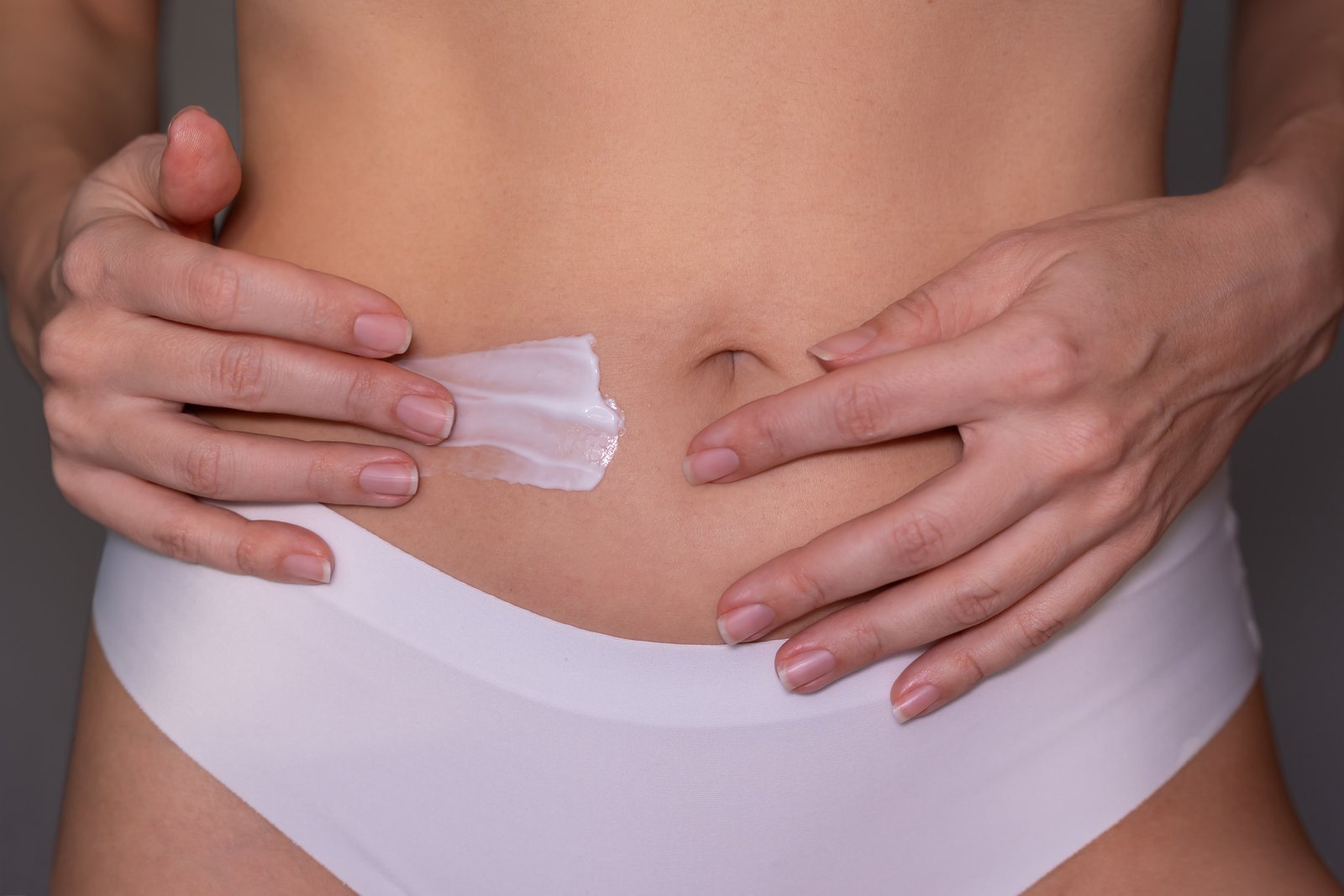
Use silicone gel or sheets: applied as your surgeon directs during the first six weeks, silicone products can help the scar form as thin and flat as possible. The Seminars in Plastic Surgery review reports that some studies found better scar elasticity and appearance with silicone sheets than with no treatment.
Keep it out of the sun: ultraviolet light can darken a new scar or thicken it. Cleveland Clinic advises sunscreen with an SPF of 30 for 12 to 18 months after a tummy tuck whenever you are in the sun.
Ask about scar massage: Cleveland Clinic notes that gentle massage may be considered from about two to three weeks after surgery, once the incision has closed. Check with your surgeon before you start.
Give the incision time: stretching, heavy lifting and strenuous exercise put tension on the scar. On our recovery timeline, strenuous exercise usually returns around month two, once your surgeon clears you.
Avoid smoking: smoking interferes with wound healing, and our surgeons ask tummy tuck candidates not to smoke or to be willing to quit.
If Your Scar Heals Thicker or Darker
Most tummy tuck scars settle into a flat, pale line, but some do not. "Unfavorable scarring" is one of the tummy tuck risks listed by the American Society of Plastic Surgeons, alongside poor wound healing, skin discoloration, fluid collection (seroma), infection, changes in skin sensation and the possibility of revision surgery. Your surgeon reviews these risks with you before surgery.
The ASPS describes two kinds of raised scar on its scar revision page:
Hypertrophic scars: thick, often red scars that stay within the incision line and can become wider over time. The Seminars in Plastic Surgery review notes that many improve on their own, which is why gentler treatments come first.
Keloids: larger scars that grow beyond the edges of the original incision and may itch. They are harder to treat and more likely to return.
If your scar is raised, wide or darker than expected, tell your surgeon at your follow-up rather than waiting. According to Cleveland Clinic, options range from silicone and steroid injections to laser skin resurfacing, and scar revision surgery is usually considered only after 12 to 18 months, once the scar is about as good as it is going to get. The ASPS is clear that revision can make a scar less noticeable, but a scar cannot be completely erased.
How Our Surgeons Plan Around the Scar
Scars are a necessary part of any surgery, so the planning starts with where yours will go. Our surgeons place tummy tuck incisions where the scar is easily concealed by undergarments and swimsuits, and they personalize the technique and incision to your anatomy and goals.
The goals of every tummy tuck at CPS: a low, easily concealable scar, a natural-appearing belly button, athletic and elegant contours, and repair of separated abdominal muscles.
On the day of surgery: your surgeon goes over your plan with you once more and may mark the incision locations on your abdomen before you go into the operating room.
Existing scars and tattoos: a tummy tuck removes skin from the lower abdomen, so an existing C-section scar or a low tattoo may be partly or completely removed. Our article on how a tummy tuck affects tattoos explains how placement matters.
As our tummy tuck page puts it, most patients say the scar is a worthwhile tradeoff for the improvement they gain, but it is your decision to make. To see how healed scars look on real patients, browse our tummy tuck before and after gallery. For questions about fees, see our pricing and cost information page.
Interested in a Tummy Tuck in Washington, D.C.?
The board-certified plastic surgeons at Center for Plastic Surgery, including Dr. Samir S. Rao, perform tummy tucks in our private, AAAASF-certified ambulatory surgery center. At your consultation, your surgeon examines your abdomen, shows you where your incision would sit, and explains which technique fits your goals. We welcome patients from Washington, DC, Chevy Chase, Bethesda, Arlington, Fairfax, and surrounding areas. Call our Chevy Chase office at (301) 652-7700 or our Tysons Corner office at (703) 560-2850, or request a complimentary consultation.
Frequently Asked Questions
Can a tummy tuck remove my C-section scar?
Often, yes. A C-section scar sits in the lower abdomen, which is the skin a tummy tuck usually removes, and our mini tummy tuck is designed to tighten skin that hangs over a C-section scar. You will have a tummy tuck scar instead, placed low on the abdomen. Whether your old scar can be fully removed depends on where it sits, so your surgeon checks this at your consultation.
Will a tummy tuck remove my stretch marks?
Only the ones on the skin that is removed. A standard tummy tuck takes away loose skin, along with any stretch marks on it, usually from below and just above the belly button. The American Society of Plastic Surgeons notes that a tummy tuck cannot correct stretch marks in general; they are removed or somewhat improved only when they sit on the excess skin being taken away. Your surgeon can show you where your incision line would fall.
What happens to my scar if I get pregnant later?
Pregnancy after a tummy tuck can stretch or widen the scar, and it can also bring back loose skin, separated abdominal muscles and new stretch marks. For that reason, many women choose to wait until they have finished having children. Our article on having a baby after a tummy tuck covers the timing in more detail, and your surgeon can talk it through with you.
Does the scar feel numb?
It can. The American Society of Plastic Surgeons lists numbness and other changes in skin sensation among the possible effects of a tummy tuck, Tell your surgeon about any changes in feeling at your follow-up visits so they can monitor your healing.

About the Author
November 25, 2026